Artur Abramovych redefines Jewish identity beyond assimilation and leftist politics
Artur Abramovych, a 28-year-old intellectual born in Kharkiv, now chairs the Federal Association of Jews in the AfD. His latest essay collection explores Jewish identity, intellectual history, and the shifting politics of European Judaism. The work challenges long-held assumptions about assimilation, nationalism, and the left's relationship with Jewish culture.
Abramovych argues that modern Judaism has moved away from its earlier assimilationist tendencies. Instead, he describes today's Jewish thought as increasingly national, particularist, and aligned with right-leaning politics. His analysis spans centuries, from ancient warrior traditions to contemporary debates on identity and belonging.
Abramovych's essays contrast two enduring Jewish archetypes: the Schlemiel—a bumbling, neurotic intellectual—and the Muscle Jew—a figure of strength, assertiveness, and physical vigour. He traces the latter back to historical movements, including the Maccabees, Hellenistic Jewish athletes, and 19th-century German gymnastics clubs. These influences shaped Muskeljudentum (Muscular Judaism), a concept championed by Zionist thinker Max Nordau in 1898. Nordau framed it as an antidote to the perceived weakness of diaspora Jews, celebrating heroism over passive assimilation.
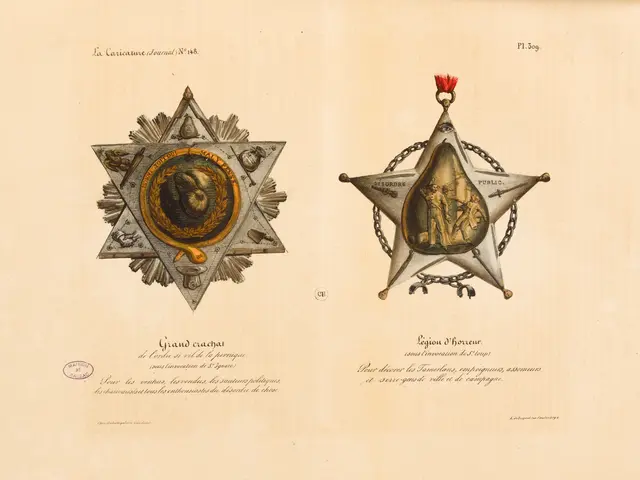
The book also revisits the 19th-century French left's antisemitic legacy. Abramovych points to pogroms during the Second Republic and the left-liberal press's initial hostility in the Dreyfus Affair. He argues that today's Jewish left risks repeating the mistakes of Reform Judaism, which sought to dissolve Jewish distinctiveness. Instead, he elevates figures like religious scholar Hans-Joachim Schoeps, whose confident particularism offers an alternative to assimilation.
Abramovych's critique extends to contemporary voices, such as writer Max Czollek and historian Meron Mendel, who interpret Judaism through a leftist framework. He also examines the feud between philosopher Theodor Lessing (a self-styled 'muscle Jew') and writer Samuel Lublinski, illustrating deeper tensions within Jewish intellectual circles.
Breaking with conventional narratives, Abramovych rejects the idea that Germanness inherently threatens Jewish existence. He suggests a potential alliance between patriotic Germans and Jews, framing nationalism as a shared ground rather than a point of conflict.
Abramovych's collection presents a provocative reappraisal of Jewish identity, one that rejects assimilation in favour of particularism. His arguments position nationalism and physical strength as central to a revitalised Judaism. The essays also challenge the left's historical relationship with Jewish culture, proposing a different path forward for European Jewish thought.
The book arrives as debates over Jewish belonging and political alignment continue to evolve. Its release coincides with Abramovych's role in the AfD-affiliated Jewish association, adding weight to his call for a more assertive, self-defined Jewish future.