
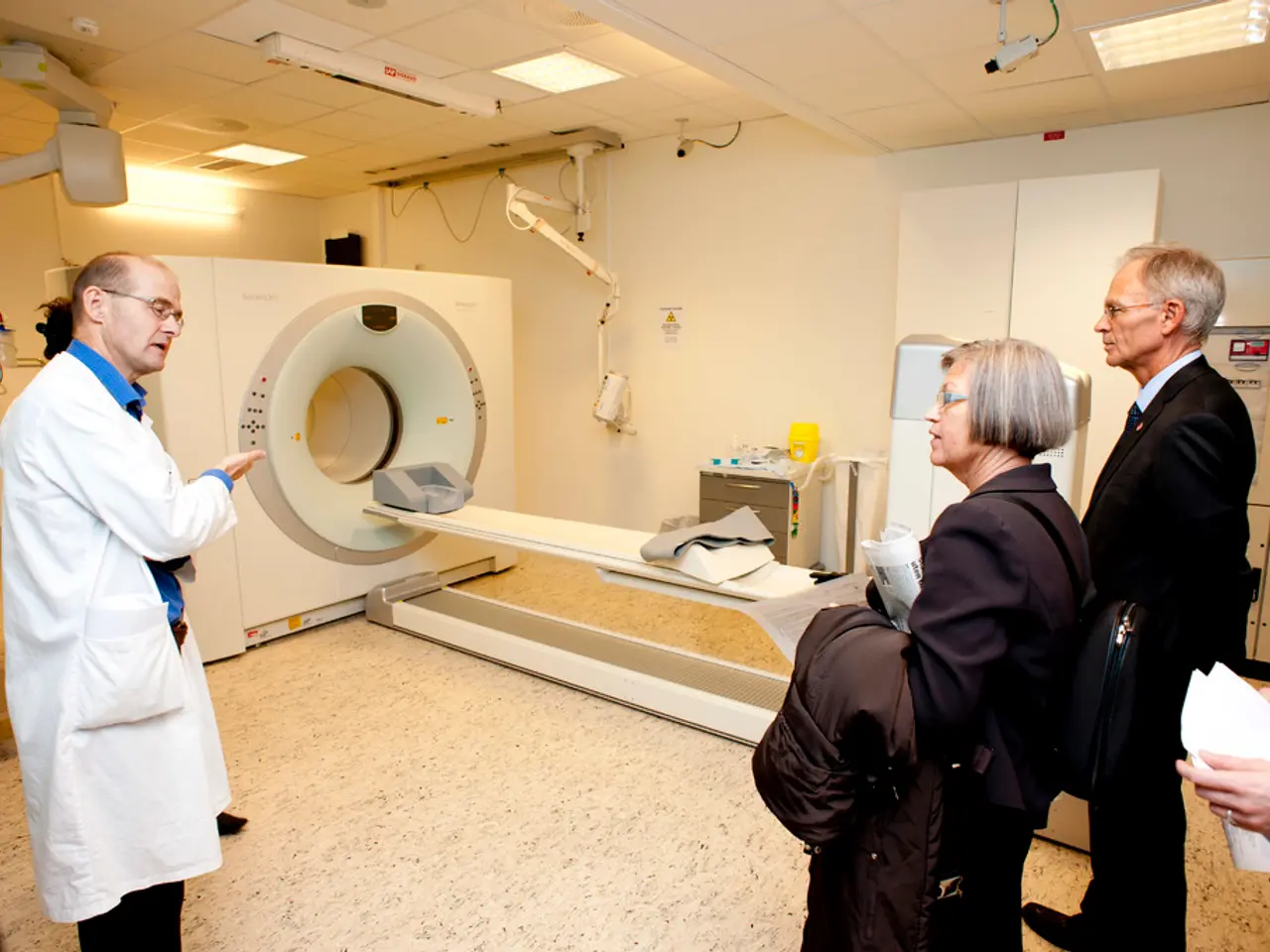
Justification for Routine Head CT Scans in Elderly Patients (75 or older) with Mild Traumatic Brain Injuries Solely Due to Antithrombotic Therapy Could Be Considered Legitimate
In the realm of healthcare, the practice of transferring elderly patients with mild traumatic brain injury (mTBI) for routine emergency imaging is a topic of ongoing debate, particularly for those residing in institutional settings like retirement or nursing homes.
mTBI, also known as concussion, refers to impacts to the head as well as acceleration and deceleration movements without direct trauma to the skull. This type of injury disproportionately impacts the elderly, especially those over the age of 75, and is a common reason for visits to emergency departments.
However, the options for surgical intervention are limited for elderly mTBI patients, and injuries in this age group often result from low-kinetic events, most commonly falls from standing height. This raises questions about the necessity of routine imaging, particularly in patients on antithrombotic therapy.
A recent study aims to evaluate criteria that could potentially eliminate the need for systematic head CT scans in elderly patients (aged 75 or older) presenting with mTBI due to antithrombotic therapy. The study includes patients who underwent a head CT scan at an academic center for mTBI while on antithrombotic therapy between January 2022 and December 2022.
The effectiveness of criteria for eliminating systematic head CT scans in this high-risk population is currently limited and debated. There is no universally accepted clinical decision rule or biomarker that reliably excludes the need for head CT in this group, due in part to heterogeneity in studies and patient characteristics.
Key points from the study indicate that there is a lack of strong evidence supporting the omission of head CT scans in elderly patients on antithrombotic therapy after mTBI. The risk profile of this group and the potential severity of intracranial bleeding necessitate a low threshold for imaging.
Moreover, a randomized controlled trial did not demonstrate efficacy for systematic preemptive reversal of anticoagulation in mild TBI, indirectly suggesting caution in changing standard imaging protocols based on anticoagulation status.
The use of computed tomography (CT) for diagnostic purposes in mTBI contributes to higher public health costs, and a reduction in the number of CT scans performed in the aftermath of a traumatic brain injury would result in a major medical-economic saving.
In summary, existing criteria to safely exclude head CT in elderly patients (≥75 years) on antithrombotic therapy with mild TBI are not sufficiently validated or effective to recommend eliminating systematic CT scanning. Until more research is conducted and reliable criteria are developed and validated, routine head CT remains standard care for these patients.
In the health-and-wellness sector, the evaluation of criteria to reduce the need for routine head CT scans in elderly patients (aged 75 or older) with mild traumatic brain injury (mTBI) due to antithrombotic therapy is under investigation. This study, focused on patients who underwent a head CT scan at an academic center for mTBI while on antithrombotic therapy between January 2022 and December 2022, serves to address the current limited effectiveness of these criteria and the ongoing debate within the scientific community.



%20with%20Mild%20Traumatic%20Brain%20Injuries%20Solely%20Due%20to%20Antithrombotic%20Therapy%20Could%20Be%20Considered%20Legitimate)