Behind the Façades
New exhibition uncovers dark and hopeful chapters of mental health history
The first entry in the guestbook begins with the sentence: "My great-grandfather was murdered here." A statement that seems almost out of place in this freshly restored Art Nouveau building with its appealingly modern exhibition design. The darkest chapter in the treatment of the mentally ill—the Nazis' "euthanasia" program—cannot and must not be omitted from an exhibition on mental health, on therapies through the centuries, and society's evolving attitudes.
At the Lower Austrian State Hospital in Mauer-Öhling (near Amstetten), this history is not glossed over. Instead, it is confronted through numerous documented patient fates. The family of the aforementioned great-grandfather, Friedrich Schuler, provided the exhibition with his writings—records left by a man murdered in 1945. From the 1920s onward, likely traumatized by his experiences in World War I, he had been a patient in several psychiatric institutions.
It is these glimpses behind the names and numbers that define the exhibition, which opened yesterday. Visitors must look beyond the surfaces, engage deeply—and this curatorial approach by Niko Wahl and Michael Resch mirrors the act of peering into the human psyche itself: elusive, complex, its emotions and expressions often difficult to categorize.
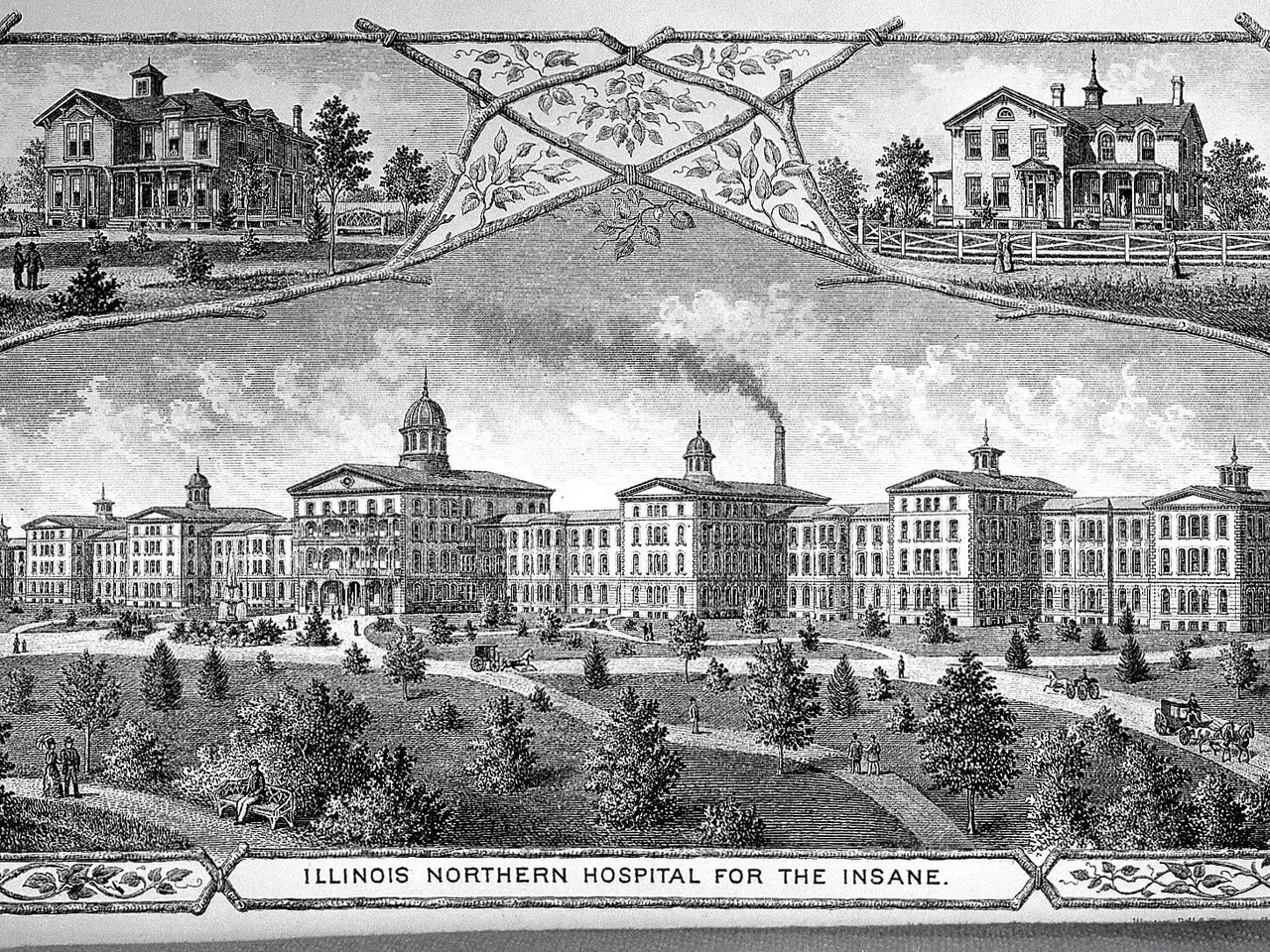
The inward gaze also applies to the exhibition's setting: a sprawling hospital complex, built in 1902 with over 20 Art Nouveau pavilions nestled in an idyllic park—and still fully operational during the show. A first in the exhibition world. Across four sections, each with 22 thematic stations, the restored administration building guides visitors through the subject. The themes range from society's historical responses to "otherness" to diagnoses and treatments—offering many insights, especially since patients were always treated according to the medical standards of their time.
Yet until the mid-20th century, options were limited. The principle of "confinement and sedation" prevailed, illustrated by exhibits like restraint beds and straitjackets. Particularly moving is a 1920 drawing by a German patient, who meticulously sketched his vision of a "dignified alternative to straitjackets," complete with annotations.
Artistic expression, in fact, plays a central role throughout the exhibition as a means of communication with the world. On display are the colorful table and lamp from the room of August Walla, the renowned artist from Gugging, alongside works by Josef Rädler. A porcelain painter who lived in the Mauer clinic from 1905 to 1917, Rädler captured institutional life in delicate detail. The exhibition offers a chance to discover these many unknown artists.
Artifacts from Daily Hospital Life
What makes the exhibition so vivid are the countless artifacts unearthed "from the depths of Mauer," as the curators put it. Long forgotten in storage depots or preserved by private individuals—no longer part of today's clinical routine—they resurface here. One example is a wardrobe from the hospital's original ensemble of furniture, still in use today in the sacristy of Mauer Parish Church.
Then there's the contents of another chest, locked away in the clinic's storage for decades. "It was a treasure we found," say Wahl and Resch. Many of the exhibited objects will later be transferred to the collections of the Lower Austrian State Museums.
Bridges to the present—and to the more urgent-than-ever topic of mental health—are built through interactive stations, where patients, doctors, and therapists share their stories. At the end, visitors can treat themselves to an uplifting "emotional shower" via headphones, with encouraging words from pupils at Haag Elementary School. Or they can listen to James Brown singing "I Feel Good."