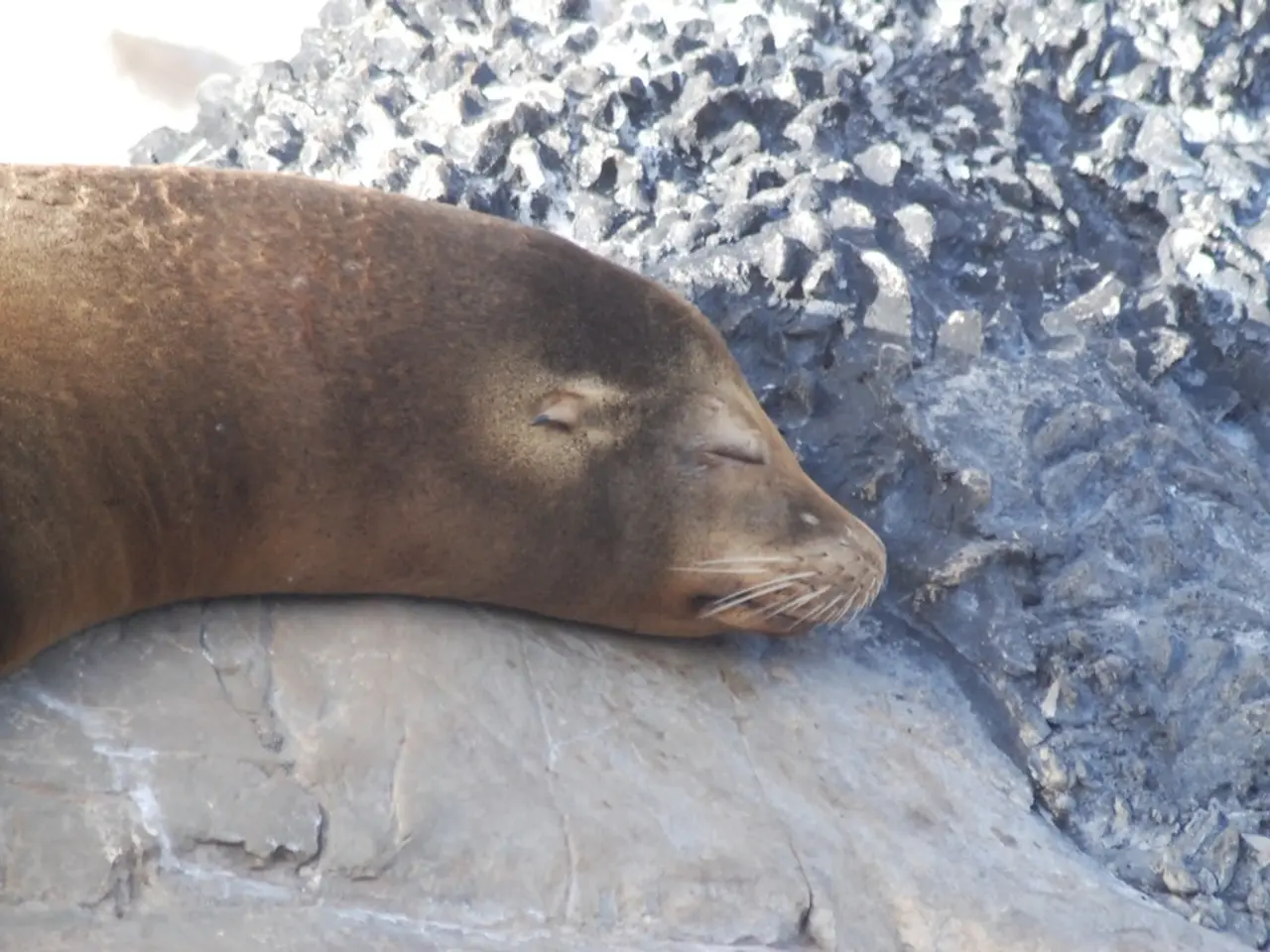
Nodding off is dangerous. Some animals have evolved extreme ways to sleep in precarious environments
Sleep is essential for every animal with a brain, from humans to jellyfish. Yet some creatures have developed extraordinary ways to rest in the most challenging conditions. Recent studies reveal how seals, penguins and birds adapt their sleep patterns to survive in extreme environments.
Northern elephant seals spend much of their time diving deep in search of food. Researchers found that around a third of their dive time is spent asleep. The animals nap during the deepest parts of their dives, where predators rarely venture.
Chinstrap penguins face their own challenges during breeding season. To cope, they take thousands of tiny naps each day, averaging just four seconds long. Over 24 hours, these brief rests add up to around 11 hours of sleep. Unlike humans, penguin parents can sleep with one brain hemisphere at a time, allowing them to stay alert to threats. Great frigatebirds take adaptation even further. These seabirds can fly for weeks without landing, relying on a unique ability to sleep while airborne. Studies in the Galápagos Islands showed that they rest one half of their brain at a time, keeping the other half active for navigation. Scientists like Niels Rattenborg and David Lesku have tracked these behaviours in frigatebirds, seals and sea lions, uncovering the flexibility of sleep in the wild.
These findings highlight how animals evolve to sleep in even the most demanding situations. While scientists continue to explore why sleep is necessary and how much we truly need, one thing remains clear: rest is a fundamental part of survival. The research was supported by institutions including the Howard Hughes Medical Institute and the Robert Wood Johnson Foundation.