Understanding Bear Torpor: Delving into the Biology, Survival Tactics, and Misconceptions of Winter Bear Sleep
In the colder months, bears across North America and beyond prepare for a unique form of winter survival known as hibernation. While this term is often associated with deep, continuous sleep, the reality is far more intricate.
Bears, particularly grizzlies and black bears, enter a phase called hyperphagia, consuming massive amounts of food to build fat reserves. This is crucial as the primary reason for hibernation is to survive periods of food scarcity during winter.
Contrary to popular belief, bears are not in a continuous state of deep sleep during hibernation. Instead, they exhibit a state known as torpor, characterized by a slight drop in body temperature, decreased heart rate, and reduced metabolic rate. This allows bears to conserve energy when their environment does not support active lifestyles.
Interestingly, polar bears do not hibernate in the traditional sense. Male and non-pregnant female polar bears remain active year-round, while pregnant female polar bears enter a hibernation-like state known as denning. During denning, they create a warm, insulated environment to protect their offspring, born in January or February, until they are ready to venture out in the spring.
Bears retreat to dens or other sheltered locations during hibernation for protection from harsh winter conditions. One common misconception is that bears occasionally eat or drink during hibernation. In fact, bears do not consume any food or water during this period. Instead, they rely on the fat reserves built up during hyperphagia.
Another misconception is that bears are in a deep sleep throughout hibernation. In reality, bears are not in a continuous state of deep sleep. They maintain some alertness and can wake to forage if winter is mild. This moderate level of alertness and the bears' ability to quickly become alert if threatened or disturbed set bear hibernation apart from the deep hibernation of smaller mammals.
Bears are able to preserve their muscle mass and organ function during hibernation due to their ability to recycle nitrogen and other nutrients. This is another factor that distinguishes bear hibernation from true hibernation, where animals experience significant muscle and bone loss.
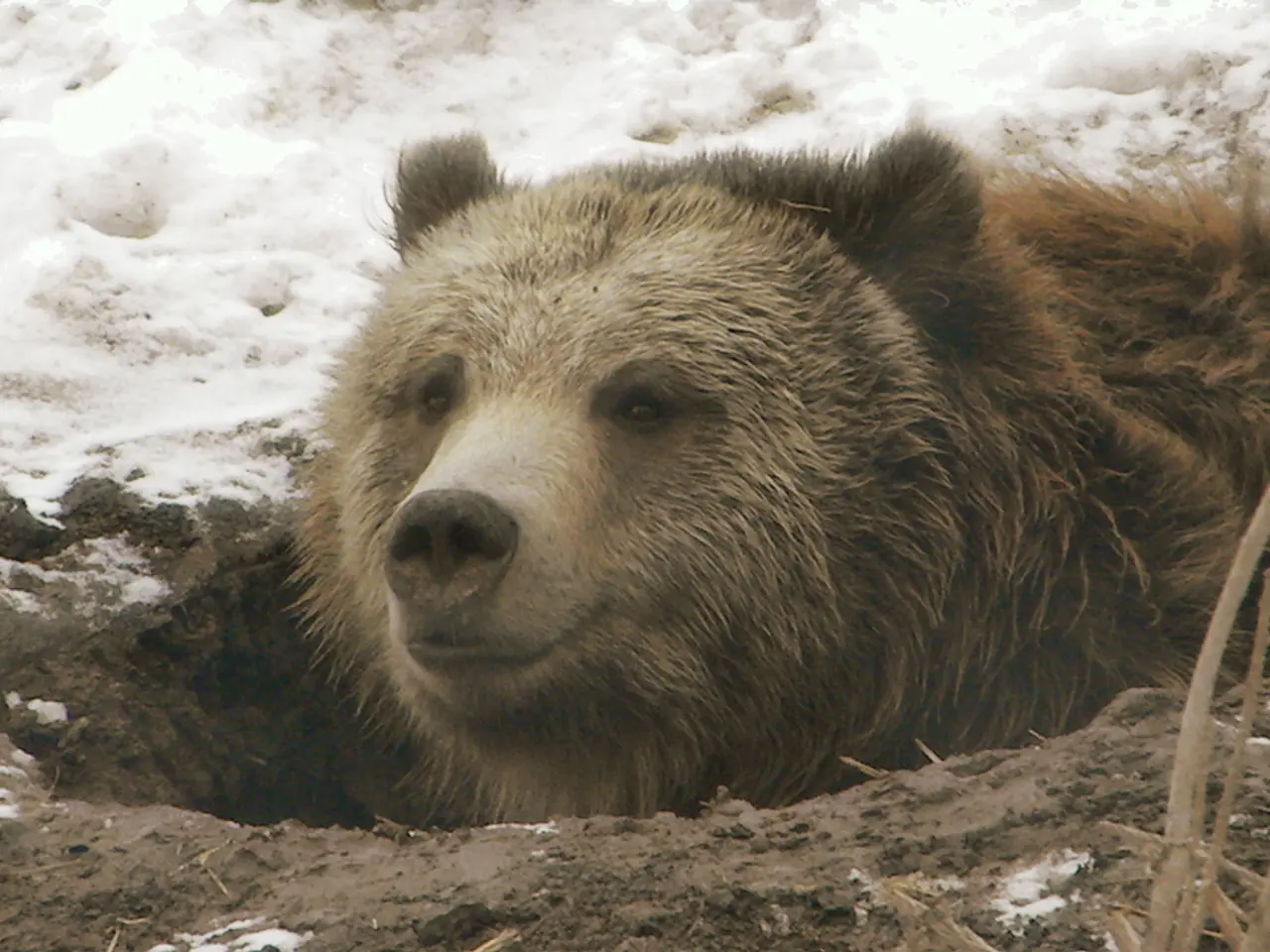
Grizzly bears, found in regions with harsh winters such as Alaska and the Rocky Mountains, are particularly notable for their ability to adapt their hibernation behavior based on environmental conditions. Black bears, the most common hibernating bear species in North America, typically enter hibernation in late November or December and emerge in March or April. Female black bears often give birth to one to three cubs during hibernation, nurturing them with milk until they are ready to leave the den in spring.
In summary, while bears undergo a form of dormancy known as torpor or a specialized hibernation, it is distinct from the deep hibernation of smaller mammals. This unique form of winter survival allows bears to conserve energy, protect their young, and survive periods of food scarcity, making it an essential adaptation for these magnificent creatures.
- Adequate nutrition plays a crucial role in bears' hibernation, as they undergo a phase called hyperphagia to build fat reserves before winter, surviving periods of food scarcity during this dormant period.
- In contrast to popular belief, bears are not in a continuous state of deep sleep during hibernation; instead, they exhibit a state called torpor, which conserves energy in response to a harsh climate.
- Pregnant female polar bears, unlike grizzlies and black bears, enter a denning-like state during winter, creating an insulated environment to protect their newborns born around January or February.
- Climate change may influence bears' hibernation behavior, as changes in winter conditions could affect the timing and duration of hyperphagia and hibernation.
- The study of bears' hibernation, environmental science, and medical-conditions overlap, offering insights into health-and-wellness adaptations, nutrient recycling, and the interconnectedness of human-led climate change and wildlife survival.