Wheelchair user's 90-minute ordeal exposes Germany's rail accessibility crisis
A 33-Minute Delay—Or a 90-Minute Ordeal
On a Saturday in September, an ICE train arrives in Munich 33 minutes late. Passengers without disabilities grumble—they've lost half an hour of their lives. At worst, they might miss an important meeting or a connecting train.
But for Karin Cordes-Zabel, who sits in the same train in a 200-kilogram electric wheelchair, those 33 minutes stretch into an hour and a half. The railway staff were overwhelmed. Her husband, Frank Cordes, explains in an Instagram video: The pre-booked platform lift service never showed up, and the station's only accessible restroom was out of order.
"I'd love to say this was an isolated incident," the 53-year-old says over the phone in mid-February. Since 2022, he and his wife—who communicates via a speech-generating device—have been documenting their often bumpy train journeys on social media. Three days a week, on average, "Frankyman" and the "Zauberbärin" (Magic Bear), as they're known online, spend their time on trains.
They simply love traveling by rail, they say—especially at night. Their videos on Instagram and Facebook reach thousands, sometimes millions, of viewers. They maintain close contact with Deutsche Bahn.
Through their reports, Karin Cordes-Zabel and Frank Cordes from Bremerhaven aim to help make Germany's rail network more accessible. Experts call it a monumental task. Because accessibility was an afterthought in planning and construction, retrofitting stations and trains is technically and logistically complex, critics say. But are barrier-free solutions really that complicated? And is there hope that mobility-impaired travelers will see real improvements in the coming years?
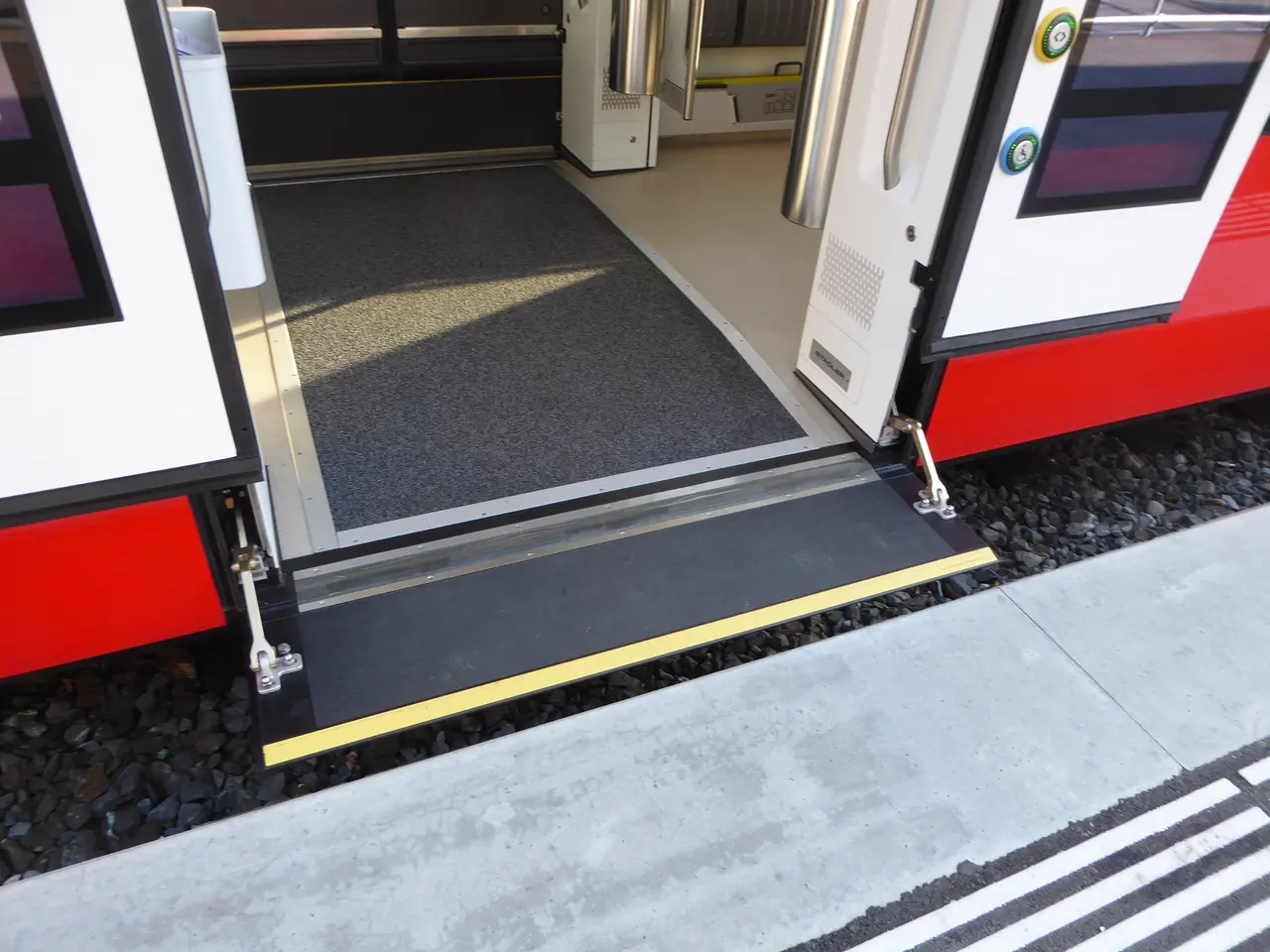
Deutsche Bahn, for its part, promises "new standards in accessibility" with its new ICE L, a train built by Spanish manufacturer Talgo. Operating on the Berlin-Cologne route since late last year, it will expand to Berlin-Hamburg-Sylt in May. Shorter than other ICE cars and slightly slower, the "L" stands for "low floor"—meaning step-free entry.
Passengers no longer face steps when boarding or alighting. For the first time, people with limited mobility can enter an ICE without assistance—no staff needed to operate lifts or deploy portable ramps. A platform lift is a small electric platform that bridges the gap between train and platform when height differences exist.
"Our lives would be so much easier," Cordes says when asked what widespread step-free ICE trains would mean for them. "Right now, at certain times, we just have to hope we'll even be allowed on a train."
In December 2022, for example, they were left stranded at a station because train staff couldn't operate the onboard lift. "We've even been told the lift was broken when it wasn't," he adds.
Many other wheelchair users report similar experiences. The lifts installed in ICE 4 trains since 2017 often fail, break down, or go unused, making travel difficult—or impossible. Across social media, newspapers, and forums, passengers describe being stuck when lifts jam, malfunction, or simply aren't operated. And when delays happen, they're often the ones left explaining themselves to other passengers.
"Our lives would be so much easier," Cordes repeats, imagining a future where step-free ICE trains are the norm. "Right now, at certain times, we just have to hope we'll even be allowed on a train."